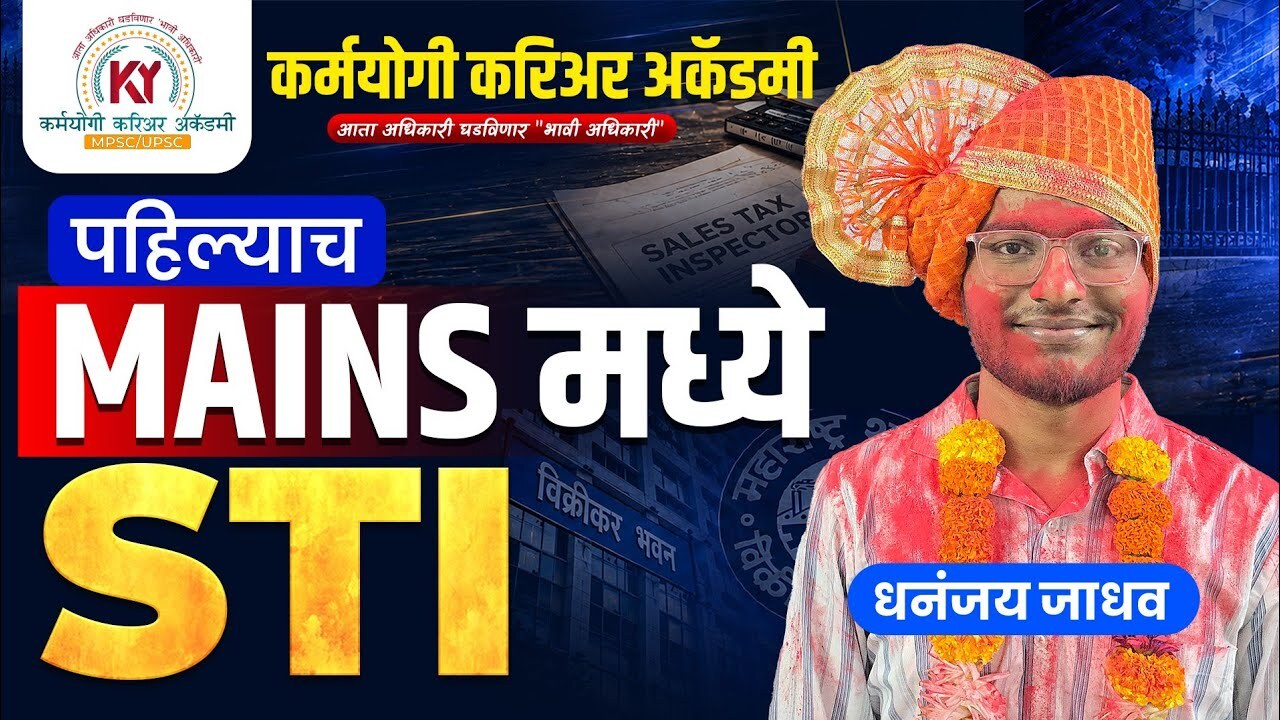
For many MPSC aspirants, the State Tax Inspector (STI) post is not just another government job. It represents career stability, responsibility, respect and the result of months—or sometimes years—of disciplined preparation. That is why a first-attempt success story attracts attention: it challenges the belief that aspirants need multiple attempts before they can realistically expect selection.
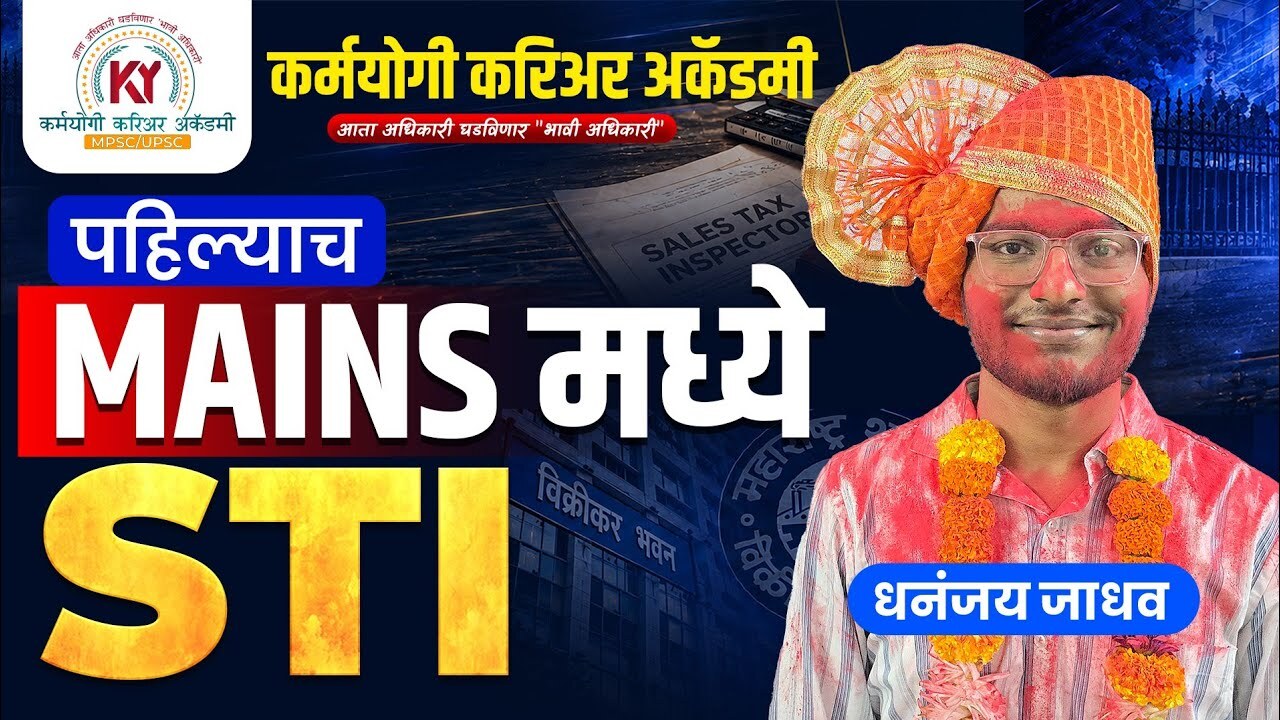
Karmayogi Academy’s student success video featuring Dhananjay Jadhav highlights an STI selection achieved in the first serious attempt. Instead of treating the result only as motivation, this article uses the story as a practical framework for students preparing for the MPSC Combine Group B examination—especially those searching for a focused STI preparation strategy and structured MPSC Combine classes in Nashik.
Watch the student success video: Dhananjay Jadhav – Karmayogi Academy YouTube Video
A result is useful only when it changes the way you prepare. The biggest lesson from a first-attempt selection is not that the exam is easy. It is that preparation becomes more effective when an aspirant starts with clarity: a defined target post, a limited set of reliable resources, regular testing, repeated revision and honest analysis of mistakes.
Many candidates lose valuable months in three areas: collecting too much study material, changing strategies too frequently and postponing test practice until they “finish” the syllabus. A result-oriented approach does the opposite. It connects every topic to the exam pattern, every revision to recall, and every test to measurable improvement.
For aspirants targeting STI through MPSC Combine Group B, the real question is therefore not “How many hours should I study?” but “Is my current study system increasing my probability of selection?”
The MPSC Combine examination is a major route for candidates targeting Group B posts such as State Tax Inspector (STI), Police Sub-Inspector (PSI) and Assistant Section Officer (ASO). Because several posts share a common preparation base, a well-planned Combine strategy can open more than one opportunity in the same preparation cycle.
This is where many beginners make their first mistake: they start reading books before studying the latest official notification, syllabus and previous-year papers. Before building a timetable, confirm the current examination structure, eligibility, syllabus and post-specific requirements from the official MPSC notification. Exam patterns and rules can change, so preparation should always be aligned with the latest official information.
Karmayogi Academy’s current MPSC Combine programme in Nashik is designed around Group B and Group C preparation with a common foundation and post-focused guidance. Explore the MPSC Combine Group B & C course.
Clearing Prelims is an important milestone, but an aspirant who thinks only about the first stage may enter the next stage underprepared. Build your foundation in a way that supports the complete selection process. Your notes, revision cycles and test practice should gradually move from basic understanding to exam-level recall, accuracy and application.
PYQs are not an activity to save for the final month. They reveal what the commission repeatedly asks, how options are framed, which areas deserve more depth and how factual knowledge is converted into objective questions. After studying a topic, solve relevant PYQs and record the concepts behind your mistakes. This keeps preparation exam-oriented instead of textbook-oriented.
A common reason aspirants feel overwhelmed is not a shortage of material but an excess of it. One reliable source revised multiple times is usually more valuable than several sources read once. Maintain short revision notes, mark high-frequency facts and return to them at planned intervals. The goal is recall under pressure, not the size of your study folder.
Waiting for the syllabus to become “100% complete” delays the most important feedback mechanism in competitive exam preparation. Start with topic-wise tests, move to subject-wise tests and then increase full-length simulations. Tests should tell you whether you are improving in accuracy, speed, question selection and retention.
A low score is not useful unless you know why it happened. Divide errors into categories: concept gap, memory failure, careless reading, confusion between options, time pressure or unnecessary guessing. Different errors require different fixes. This is how mock tests become a preparation tool rather than a score-checking exercise.
Motivation changes from day to day. A repeatable study system is more reliable. A strong week may include concept learning, PYQs, current-affairs revision, timed tests and one dedicated error-analysis session. The exact number of study hours can differ from person to person; consistency and measurable output matter more.
Self-study works well when you already know what to study, what to ignore, how much depth a topic needs, when to revise and how to diagnose poor test performance. If these decisions are consuming too much time, structured coaching and mentorship can reduce trial and error. The value of coaching is not simply access to lectures—it is having a system for preparation, testing, feedback and correction.
If you are actively preparing for STI, use the following framework to check whether your current plan is moving in the right direction:
Foundation: Understand the syllabus, build subject fundamentals and create concise revision notes from the beginning.
PYQ Mapping: Connect each completed topic with previous-year questions to understand the expected depth and recurring themes.
Practice: Solve objective questions frequently instead of relying only on passive reading and video lectures.
Testing: Introduce timed tests early and gradually simulate real examination conditions.
Error Diagnosis: Maintain an error notebook or digital tracker and revisit repeated mistakes every week.
Revision: Schedule multiple revision cycles. In the final phase, reduce new material and strengthen what you already know.
Post-Focused Preparation: As you move closer to the Mains stage, align your preparation with the requirements of the specific post you are targeting and the latest official syllabus.
Searches such as “MPSC classes in Nashik,” “MPSC Combine classes in Nashik” and “STI classes in Nashik” usually come from aspirants who are already beyond the awareness stage. They are comparing where to study, whether classroom guidance is worth it, how regularly tests are conducted and whether the preparation is relevant to their target post.
A serious aspirant should evaluate any MPSC coaching institute on practical factors rather than advertising alone:
Karmayogi Academy’s current MPSC Combine Group B & C programme is a 52-week classroom course in Nashik and includes regular testing, structured preparation and post-focused tracks for candidates targeting posts such as PSI, STI and ASO. For current batch details, always confirm the latest schedule directly with the academy.
Structured coaching may be especially useful if you are:
Success stories can motivate you for a day. A preparation system can improve you every week. That is the most useful way to look at Dhananjay Jadhav’s STI selection. Instead of comparing your journey with someone else’s timeline, compare your preparation today with where it was one month ago.
Ask yourself:
If you cannot answer these questions clearly, your next step is not necessarily to study longer. It is to make your preparation more measurable.
STI is one of the key posts targeted by aspirants preparing for MPSC Combine Group B. Candidates should always check the latest official MPSC notification for the current exam structure, vacancies and eligibility conditions.
A first-attempt selection is possible, but there is no shortcut or guaranteed timeline. Strong fundamentals, repeated revision, PYQ practice, timed testing and disciplined error analysis can make a first serious attempt much more competitive.
Begin with the latest official syllabus and exam pattern. Build core subject fundamentals, start PYQs early and create a revision-and-testing routine rather than spending months only consuming lectures or collecting material.
They can be useful when the programme provides structured syllabus coverage, PYQ-based preparation, testing, revision and post-focused guidance. Aspirants should compare these factors before choosing a coaching institute.
Karmayogi Academy offers MPSC Combine Group B & C coaching in Nashik for aspirants targeting posts including STI, PSI and ASO. Check the current course page or contact the academy for the latest batch details.
Dhananjay Jadhav’s STI success story is valuable because it turns an abstract goal into something concrete: selection is possible when preparation is focused, measured and consistently corrected. Use the story as motivation, but build your own result through a clear syllabus plan, PYQs, tests, revision and honest analysis of weaknesses.
For aspirants searching for MPSC Combine classes in Nashik, the right next step is to compare preparation systems—not just promises. Choose a path that helps you study the right content, practise under exam conditions and improve week after week.
Your attempt becomes serious the moment your preparation becomes measurable.