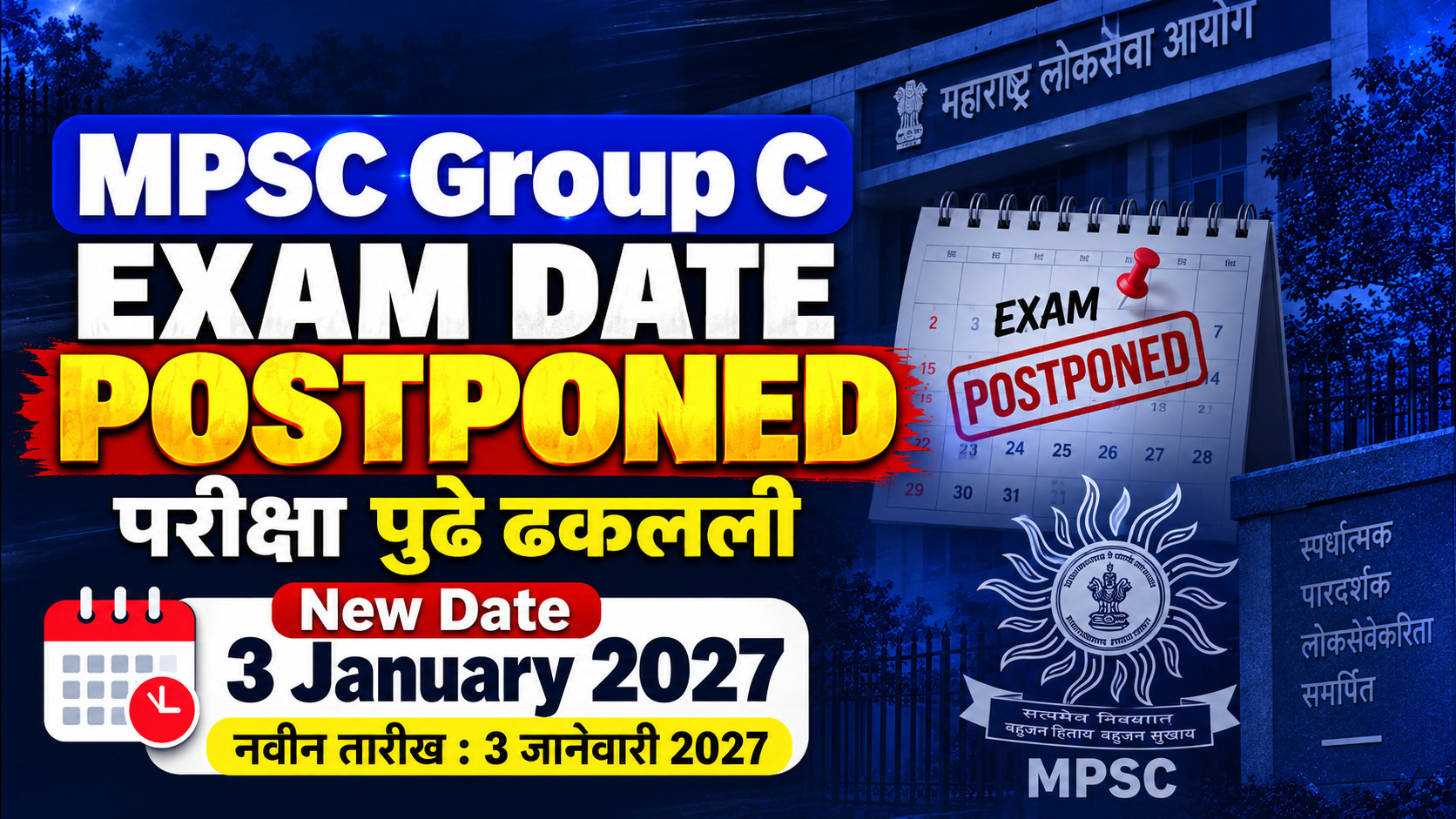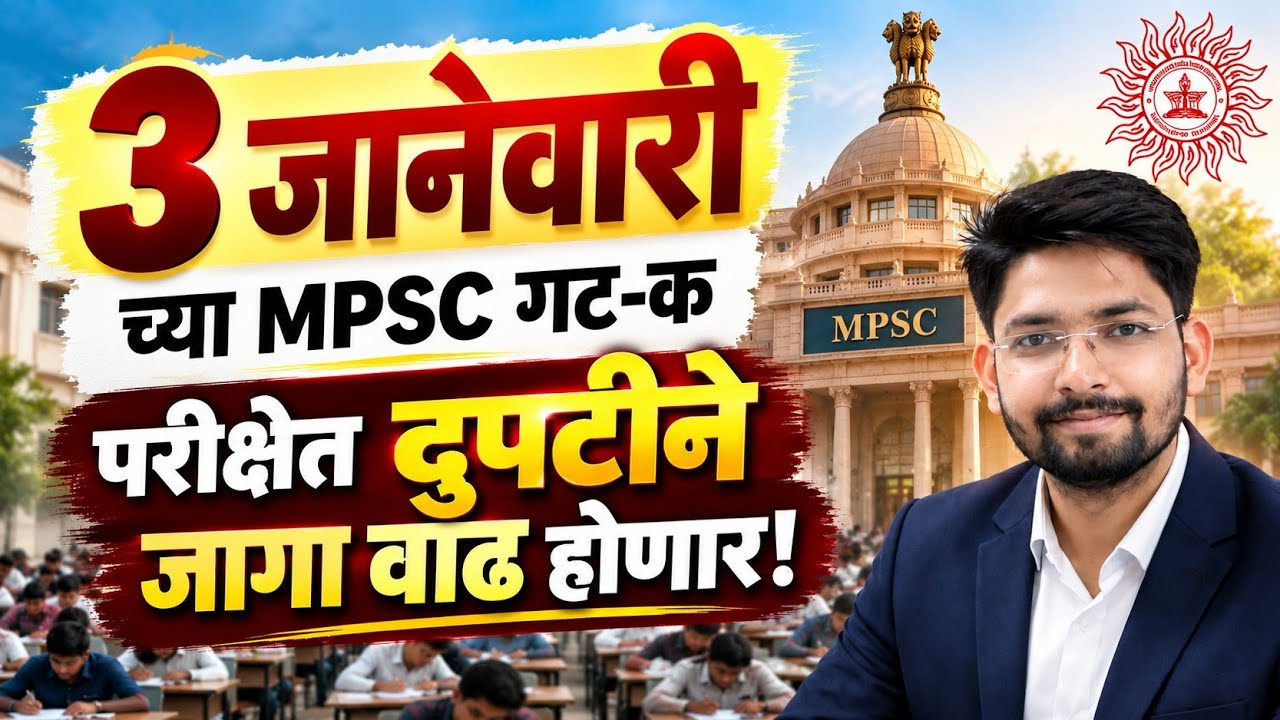
The Maharashtra Group C Services Combined Preliminary Examination 2026 is scheduled for 3 January 2027, following a revision of the examination calendar.
Meanwhile, discussions about increasing government recruitment vacancies have created considerable interest among MPSC aspirants.
The biggest question is straightforward: Will the number of vacancies increase again, potentially doubling the available opportunities?
There is encouraging news, but students must distinguish between an officially published recruitment figure and a government commitment that still requires implementation.
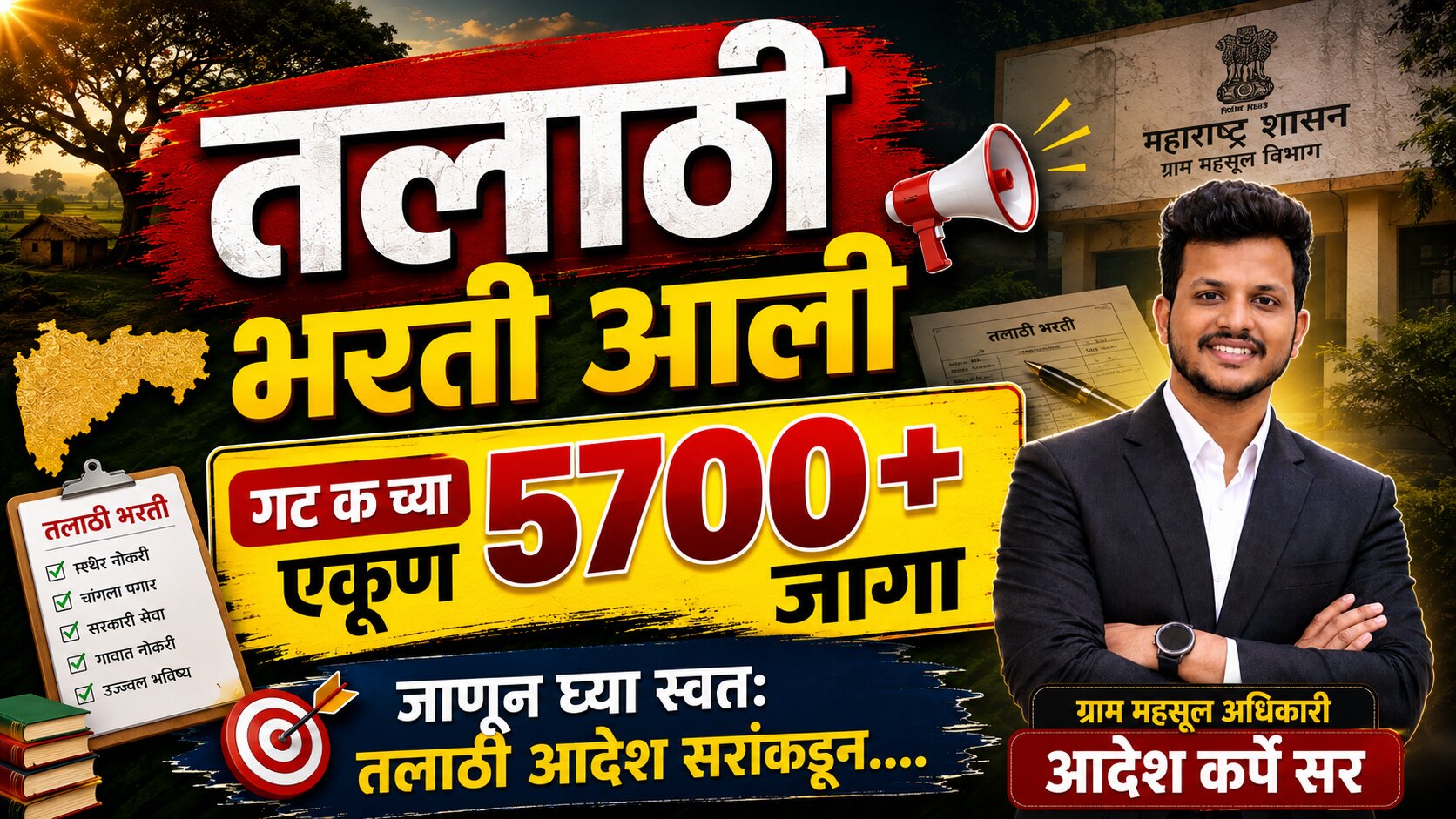
The recruitment covered by Advertisement No. 017/2026 already increased from 2,619 vacancies to 5,707 after a July 2026 corrigendum.
More recently, following protests by MPSC aspirants, news reports on 12–13 October 2026 described a government commitment to increase or double Group C recruitment opportunities associated with 2027.
Does this mean the January 3 examination will automatically have twice as many vacancies? Not necessarily.
Let's understand what has actually been announced, what remains to be clarified, and how serious aspirants should approach their preparation.
The Maharashtra Public Service Commission conducts the Group C Services Combined Examination for recruitment to several non-gazetted government posts.
The 2026 recruitment has already undergone significant changes involving the number of vacancies and examination schedule.
The key point is that the currently documented 5,707 vacancies should not be automatically replaced with a speculative new figure. A further increase for Advertisement No. 017/2026 would require an applicable official notification or corrigendum.
The original Group C 2026 advertisement, published in June 2026, announced 2,619 vacancies.
On 22 July 2026, MPSC issued a corrigendum adding 3,088 posts. The revised total became:
2,619 original posts + 3,088 additional posts = 5,707 vacancies.
This was a substantial expansion of the recruitment. In fact, the July revision already more than doubled the original advertised total.
One important addition was the inclusion of 1,539 Gram Mahsul Adhikari (Talathi) posts. The recruitment also incorporated additional Clerk-Typist and other departmental vacancies.
For aspirants preparing for Talathi, Tax Assistant, Clerk-Typist and related positions, the expansion created a broader set of advertised opportunities.
However, every candidate must still satisfy the qualifications, category conditions, and post-specific requirements prescribed in the relevant advertisement and corrigenda.
Government recruitment advertisements can change. Departments may submit additional requisitions, and a recruitment commission may publish corrections or additions.
Nevertheless, a vacancy is not officially part of a particular recruitment simply because it is discussed in a news report. The relevant official recruitment documents remain the decisive source.
This is the central question raised by the current discussion.
Following protests by MPSC aspirants, reports published on 12–13 October 2026 described several government assurances. Among these was a commitment concerning an increase in Group C recruitment vacancies.
A Times of India report dated 13 October described a commitment to double vacancies through the 2027 Group C examination.
This is important news for students hoping to secure government employment. But there is a distinction that should not be overlooked.
Although the preliminary examination is scheduled for January 2027, its advertisement is still numbered 017/2026. It belongs to the Maharashtra Group C Services Combined Preliminary Examination 2026 recruitment cycle.
A government assurance referring to the '2027 Group C examination' may concern a different recruitment cycle.
Until the relevant authorities publish clarification, candidates should not assume the commitment applies directly to the January 3 examination.
Stage 1 — Government assurance: A minister or government representative communicates an intention or commitment to expand recruitment.
Stage 2 — Administrative implementation: The government and concerned departments determine vacancies, requisitions, financial and administrative requirements, and the recruitment process.
Stage 3 — Official MPSC advertisement or corrigendum: The commission publishes recruitment information applicable to a specific examination.
Only after the applicable official publication should students treat a revised vacancy figure as confirmed for that examination.
The July 2026 expansion to 5,707 vacancies is documented. The revised preliminary examination date of 3 January 2027 has also been announced.
The later government commitment to expand Group C recruitment is significant, but its precise effect on the January examination remains unconfirmed.
Karmayogi Academy's guidance: Prepare for the confirmed examination while monitoring official announcements for any further changes.
The vacancy discussion forms part of a wider debate about transparency, recruitment opportunities and examination administration.
MPSC aspirants have raised concerns about recruitment delays and alleged examination irregularities.
In October 2026, an extended protest in Pune concluded after government representatives announced several measures and assurances.
According to contemporaneous reports, these included:
Reports identified retired judge Dilip Bhosale as the chairperson of an inquiry committee, with IAS officer Tukaram Mundhe serving as its secretary.
The inquiry was expected to examine allegations involving examination irregularities. It is important to describe these as allegations under investigation, rather than established findings.
Public examinations are not only about filling government vacancies. They also involve fairness, public trust, equal opportunity, and confidence in the recruitment system.
Candidates invest considerable time, money and effort in preparation. Predictable examination schedules, clear eligibility rules, reliable question-paper security and timely official communication help candidates plan their careers responsibly.
The wider reform discussion therefore matters to both existing aspirants and future candidates.
A larger number of vacancies can create additional opportunities. However, it does not automatically guarantee a lower cut-off or easier selection.
A recruitment has relatively few advertised posts. Competition for the available positions may be intense, especially when many well-prepared candidates apply.
The same recruitment expands its number of posts. This increases the number of potential appointments, but the outcome still depends on the applicant pool, examination performance, reservation structure, post preferences and other selection rules.
Number of eligible candidates: More vacancies can attract greater interest, although new applications may not be possible when the application window has already closed.
Examination difficulty: A comparatively easier paper may produce higher scores across the candidate pool.
Category-wise vacancies: Total vacancies and vacancies available to a particular category are not interchangeable.
Post-specific eligibility: Some posts require additional qualifications or skills.
Selection-stage performance: Preliminary qualification does not automatically mean final selection.
For these reasons, it would be misleading to predict a cut-off solely from an increased vacancy count. A better strategy is to strengthen examination performance without relying on recruitment speculation.
The preliminary examination's revised date gives candidates an additional window for preparation compared with the previous October schedule.
However, additional time has value only when it is used purposefully.
A student who repeatedly reads the same notes without testing understanding may see limited improvement. Another student who systematically identifies weak topics, solves previous-year questions and analyzes mock tests can use the preparation period more effectively.
Stage 1 — Diagnose and Complete: Identify unfinished syllabus areas and recurring weaknesses. Attempt a diagnostic test covering the relevant current syllabus. Classify mistakes into conceptual gaps, factual recall problems, calculation errors, and time-management issues.
Stage 2 — Revise and Apply: Begin regular previous-year question practice and timed subject tests. Create concise notes for topics that need repeated revision. Strengthen weak areas instead of spending every day on subjects in which you already score well.
Stage 3 — Simulate and Consolidate: Use full-length timed mock tests under examination-like conditions. Prioritize error correction, revision, OMR accuracy and consistency. In the final stage, avoid unnecessary changes to books or study material.
The precise allocation of time should depend on each student's current preparation level.
MPSC Group C aspirants should study according to the official syllabus and examination scheme applicable to Advertisement No. 017/2026.
A balanced preparation framework can include:
Students should verify the exact paper structure and applicable subject distribution from the current MPSC syllabus.
Previous-year papers help students understand the type and level of questions asked in an examination. Rather than simply memorizing the correct option, examine why the other alternatives are wrong.
This makes question-solving a learning activity instead of a mere score-generating exercise.
Suppose a candidate attempts a mock test and receives a disappointing score. The natural reaction may be to study for additional hours.
However, the most important task is to understand why the marks were lost.
For every test, record:
An error notebook can contain four points for each mistake:
Over time, this record helps reveal repeated weaknesses that ordinary reading may not expose.
Do not judge preparation from one exceptionally good mock test. Look for consistent performance across several tests.
A useful preparation trend combines improving conceptual accuracy, fewer repeated mistakes, controlled time usage and regular revision.
Mistake 1 — Treating recruitment discussions as confirmed notifications: A reported government assurance can be encouraging, but students must wait for a relevant official publication before treating it as an amended vacancy total.
Mistake 2 — Confusing the examination year with the recruitment year: The January 3, 2027 examination is currently the postponed 2026 Group C preliminary examination.
Mistake 3 — Preparing only after the next announcement: Waiting for fresh vacancy news can interrupt study momentum.
Mistake 4 — Assuming additional posts guarantee selection: Selection continues to depend on eligibility, performance and the applicable recruitment rules.
Mistake 5 — Ignoring the official website: Social media videos and educational articles can help explain developments, but they should not replace official MPSC instructions.
Candidates can reduce confusion by following a simple verification process:
This approach helps distinguish genuine recruitment updates from speculation.
The most useful response to the current developments is neither excessive excitement nor unnecessary anxiety. Instead, take practical action.
Keep your preparation based on the notified syllabus. Revise core subjects and practice objective questions consistently. Build confidence with previous-year papers and timed tests.
Monitor official announcements without repeatedly interrupting study sessions.
If a new corrigendum adds vacancies to the January examination, verify how it affects your eligibility and preferences.
If the government's commitment relates to a later recruitment cycle, continue preparing for the existing examination while keeping that future opportunity in view.
The best outcome is to be ready when an opportunity becomes official—not to begin preparing only after it arrives.
The Maharashtra Group C Services Combined Preliminary Examination 2026 was scheduled for 3 January 2027 according to the September 2026 revised schedule. Candidates should check for subsequent official changes.
The revised advertised total discussed here is 5,707 posts, following the July 2026 corrigendum that added 3,088 posts to the original 2,619 vacancies.
Reports in October 2026 described a government commitment concerning increased or doubled Group C recruitment opportunities in 2027. However, it was not established that this commitment increases the vacancies in the January 3 examination under Advertisement No. 017/2026.
No. The scheduled examination referred to in this article is the preliminary examination for the 2026 recruitment cycle, under Advertisement No. 017/2026.
Not necessarily. Cut-offs depend on several factors, including candidate performance, examination difficulty, category-wise vacancies, and selection rules. A larger vacancy count alone does not establish the expected cut-off.
Continue syllabus-based preparation, revise weak subjects, solve previous-year questions, take mock tests and analyze mistakes. Verify new recruitment developments using official MPSC notifications.
The MPSC Group C recruitment landscape had already changed significantly in 2026.
The officially documented increase from 2,619 to 5,707 vacancies created a substantial expansion in opportunities. The subsequent government commitment concerning Group C recruitment in 2027 was another important development.
Yet candidates must distinguish between confirmed recruitment figures, political or administrative assurances, and future official implementation.
For aspirants preparing for the January 3, 2027 examination, the immediate priority remains clear:
Study consistently, revise intelligently, practise under examination conditions, and verify every important announcement.
Additional vacancies may expand opportunities. Strong preparation determines how effectively a candidate can compete for them.
At Karmayogi Academy, Nashik, we encourage students to prepare with discipline, conceptual understanding and consistent practice rather than relying on uncertain predictions.
A structured approach involving syllabus coverage, previous-year questions, mock tests and performance analysis can help aspirants work toward their goals.
Explore MPSC Combine Group B and Group C preparation resources and course information through Karmayogi Academy.
Karmayogi Academy, Nashik — Prepare with Clarity. Progress with Confidence.
Sources below are supplied for editorial checking and verification against newer official notices. The article is dated 13 October 2026; it is not a live vacancy bulletin.
Maharashtra Public Service Commission — official notifications and advertisements
https://mpsc.gov.in/adv_notification/8
Times of India — Group C vacancy and inquiry assurances (13 October 2026)
https://timesofindia.indiatimes.com/city/pune/mpsc-protest-ends-with-assurance-of-60-day-probe-more-group-c-posts-and-recruitment-assurances/articleshow/134901152.cms
Loksatta — MPSC aspirant protest and inquiry developments (12 October 2026)
https://www.loksatta.com/maharashtra/mpsc-student-protest-pune-tukaram-mundhe-selected-to-probe-mpsc-paper-leak-which-student-demands-have-been-accepted-know-about-it-scj-81-6186302/
Hindustan Times — revised Group C preliminary examination date (September 2026)
https://www.hindustantimes.com/cities/pune-news/mpsc-postpones-group-c-prelims-to-january-3-2027-101789069071478.html