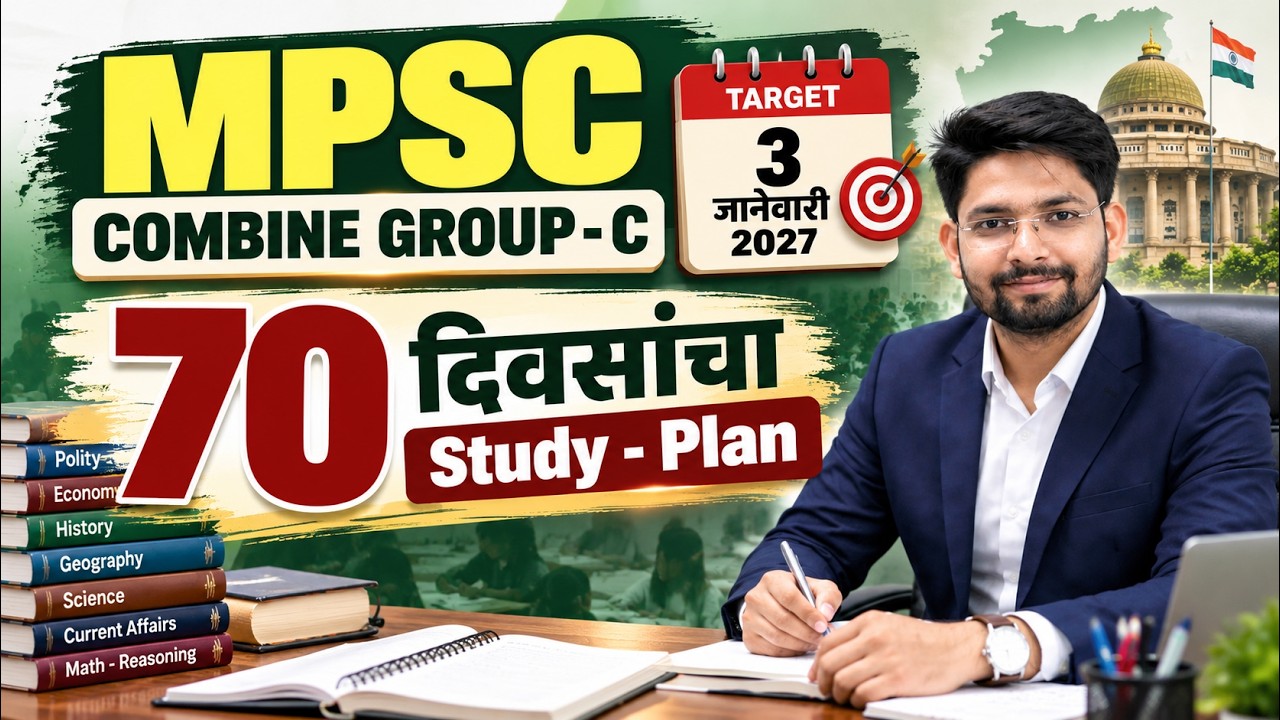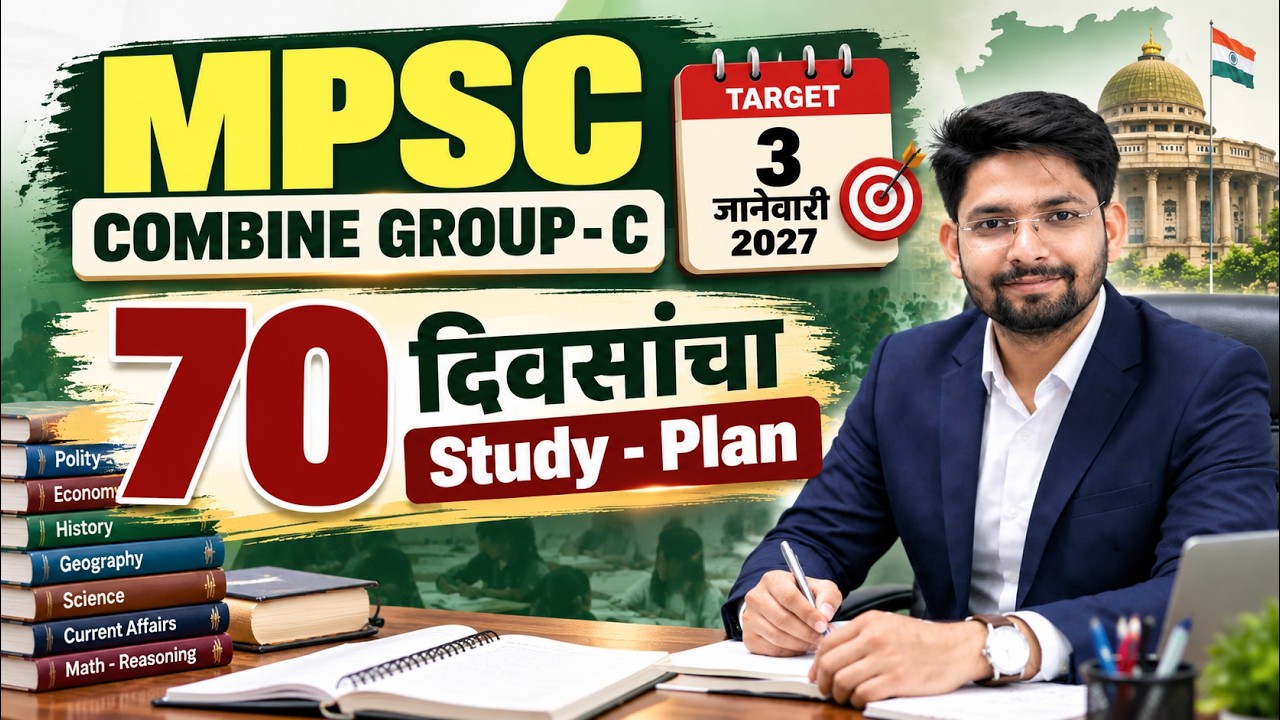
Can you prepare effectively for the Talathi examination in just 70 days?
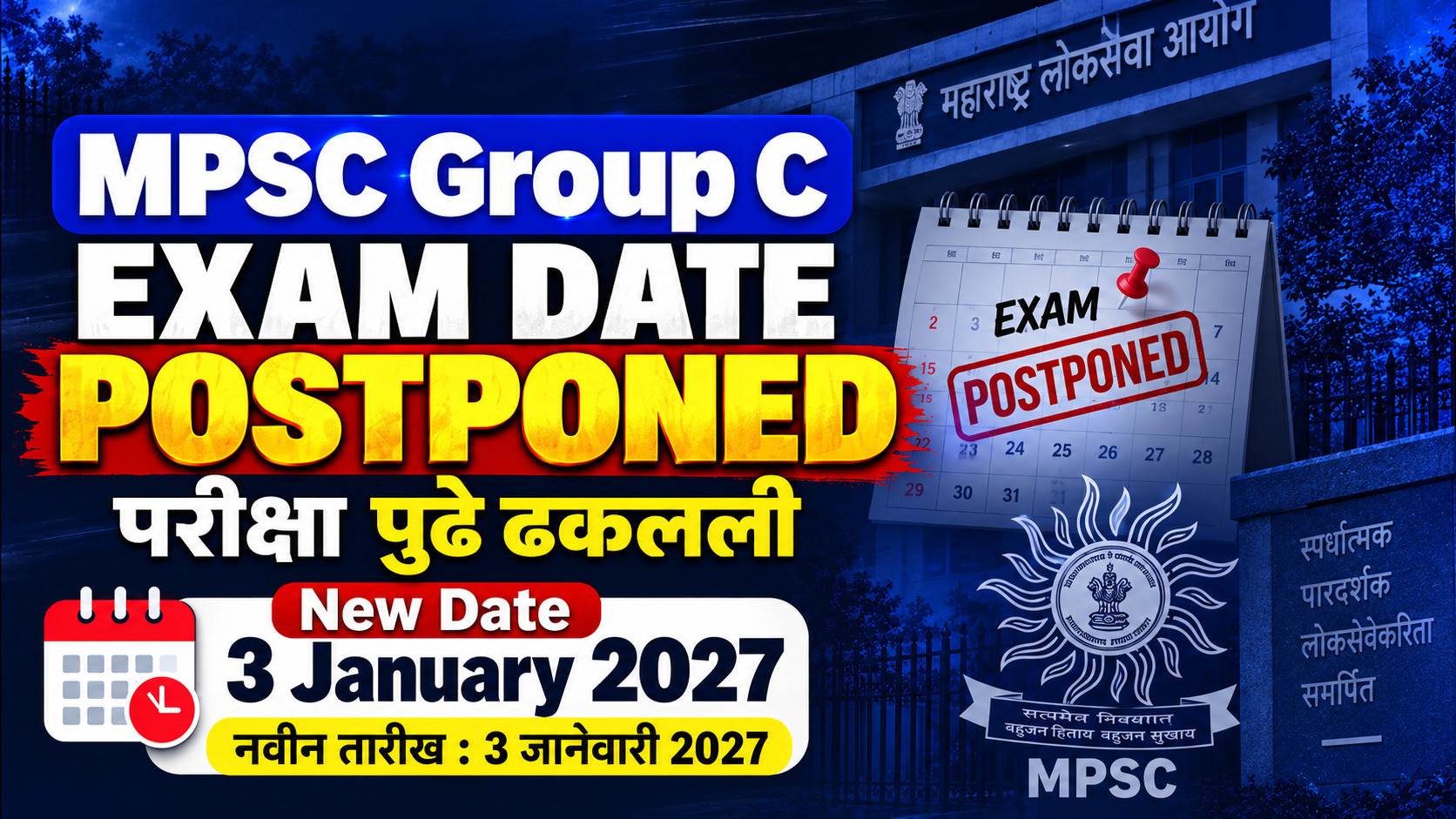
For thousands of Maharashtra government job aspirants, this is no longer a theoretical question. With the Maharashtra Group C Services Combined Preliminary Examination 2026 scheduled for 3 January 2027, the coming weeks represent an important opportunity to strengthen preparation for the Gram Mahsul Adhikari (Talathi) post.
But having 70 days does not automatically mean making 70 days of progress. Some candidates spend weeks reading the same textbooks without solving enough questions. Others complete multiple mock tests but never analyze their mistakes. Many become overwhelmed by the number of subjects and struggle to decide what deserves attention.
The solution is not necessarily to study longer. It is to study with clearer priorities.
In this guide, Karmayogi Academy, Nashik presents a practical 70-day Talathi preparation strategy built around syllabus coverage, previous-year questions, revision, mock tests, and examination accuracy. Whether you are starting with incomplete preparation or already revising the syllabus, this plan can help you organize the final phase more effectively.
Before creating a timetable, understand the examination you are preparing for. For the 2026 recruitment cycle, the Gram Mahsul Adhikari (Talathi) post is included in the Maharashtra Group C Services Combined Examination conducted by the Maharashtra Public Service Commission (MPSC).
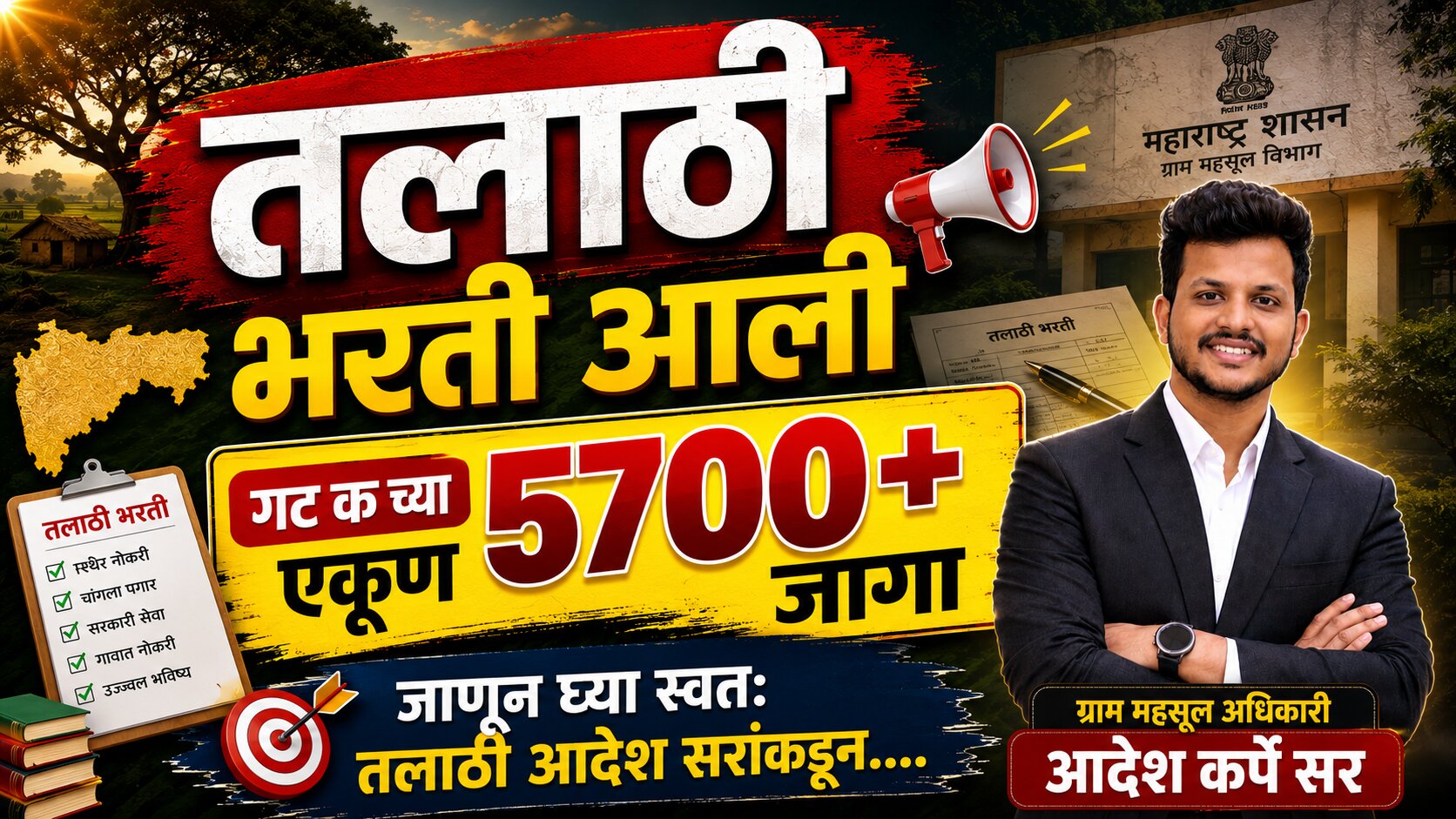
The revised recruitment announcement includes 1,539 Talathi posts, forming part of the 5,707 advertised Group C vacancies. The preliminary examination is currently scheduled for 3 January 2027 in offline OMR-based mode.
The general ability syllabus includes current affairs, history, geography, political science, economics, general science, arithmetic, and intelligence testing. Talathi candidates should follow the latest MPSC syllabus and relevant post-specific requirements rather than an outdated examination pattern.
Knowledge alone is not enough if you cannot finish the paper on time or lose marks through careless answering. Your plan should develop three abilities:
Knowledge: Understanding and remembering relevant concepts.
Accuracy: Identifying correct answers and avoiding careless mistakes.
Speed: Completing the paper efficiently under examination conditions.
The plan covers 25 October 2026 through 2 January 2027, ahead of the exam scheduled for 3 January. It has five phases: assessment, syllabus revision, applied practice, test simulation, and final consolidation.
Dates: 25 October – 3 November 2026
Begin with a full-length diagnostic mock test based on the applicable preliminary scheme. Review which subjects are strongest, where accuracy is low, and which questions consume too much time. The initial score is a starting point, not a verdict.
Divide your syllabus into three categories:
Prioritize foundational errors. If basic arithmetic is weak, repair percentages, fractions, ratios, and calculation accuracy before moving to difficult timed sets. If geography is weak, revisit rivers, rainfall, districts, agriculture, and industries before detailed fact drills.
Target by Day 10: Complete an honest diagnostic assessment, create a syllabus checklist, and begin fixing recurring mistakes.
Dates: 4 November – 28 November 2026
The next 25 days form the core of the preparation schedule. Cover all major syllabus areas while building question-solving ability. After revising a topic, immediately attempt relevant objective questions.
Focus on modern Indian history, Maharashtra’s role in important movements, and other topics prescribed in the current syllabus. Learn historical timelines alongside causes, consequences, and contributions of key figures.
Give attention to Maharashtra’s physical divisions, Western Ghats, river systems, rainfall, soil, crops, irrigation, industries, and major geographic features. Nashik’s grape cultivation, onion markets, and Godavari basin can be useful real-world examples, but local examples should supplement—not replace—the statewide syllabus.
Review the Constitution, fundamental rights, directive principles, Parliament, state legislature, the executive, and local self-government. Compare institutional roles rather than memorizing isolated labels.
Strengthen national income, inflation, banking, public finance, budgeting, taxation, agriculture, and economic development in line with the syllabus. Use familiar Maharashtra examples to test conceptual understanding.
Revise core physics, chemistry, biology, health, and everyday science. Include application-based questions rather than relying only on definitions.
Practise percentages, ratios, averages, standard numerical operations, series, relationships, and logic. Add a timer so you learn when to move on from a difficult question.
Study important Maharashtra, national, and international developments relevant to the syllabus throughout the 70-day period. Keep your source list manageable and revise short notes repeatedly.
Target by Day 35: Finish a focused first revision of major subjects and create a dependable record of topics that still cause mistakes.
Dates: 29 November – 18 December 2026
Shift from passive reading to examination-oriented application. Use previous-year questions, timed subject sets, mixed-topic practice, factual revision, full-length mock tests, and error analysis.
This ratio is a flexible planning model, not a compulsory formula. Students with unfinished fundamentals should adjust their time accordingly.
Begin solving mixed-subject sets because the real paper switches rapidly among unrelated subjects. This helps test whether you can retrieve facts and concepts without the context of a familiar chapter.
Target by Day 55: Improve mixed-test consistency, manage time more confidently, and reduce repeated errors.
Dates: 19 December – 28 December 2026
Attempt full-length mock tests under the prescribed time limit, preferably using a printed paper and an OMR-style answer sheet. Practise reading, marking, and checking question numbers without rushing.
MPSC introduced a five-option framework for objective examinations from March 2026. The applicable instructions include penalties in specified situations, including incorrect responses and leaving all options unmarked. Candidates should check the exact rules for their paper and must not assume leaving a question completely blank is penalty-free.
Knowledge errors require targeted study; conceptual errors require clearer explanations; careless errors need a checking routine; time-management errors call for timed practice.
Target by Day 65: Establish a reliable attempt strategy and demonstrate consistent accuracy across several mocks.
Dates: 29 December 2026 – 2 January 2027
Day 66 — Maharashtra Geography and History: revise frequent confusions, maps, timelines, and important concepts.
Day 67 — Polity and Economics: review key institutions, government responsibilities, and core economic principles.
Day 68 — Science and Current Affairs: refresh previously studied concepts and concise current-affairs notes.
Day 69 — Arithmetic, Reasoning, and Error Notebook: review key methods and repeated mistakes with light practice.
Day 70 — Light revision and exam logistics: check your hall ticket, centre, identification, transport, stationery, and sleep schedule.
Do not begin several unfamiliar textbooks or exhaust yourself with last-minute marathon mock tests. The final days should improve clarity and readiness, not create panic.
There is no universally correct timetable. Working professionals, college students, and full-time aspirants have different amounts of time available. Productive concentration and regular revision matter more than ambitious hour counts.
Take sensible breaks during long study sessions. Adjust the allocation as your diagnostic results and mock performance change.
Many candidates fill notebooks with facts but rarely revisit their errors. An error notebook captures the exact reason marks were lost, so it points directly to what needs attention.
For each significant error, record:
For example, when you confuse the responsibility of one constitutional institution with another, record the distinction in plain language. Later, retest the concept using a different question.
Step 1 — Solve honestly: Attempt questions without looking up answers.
Step 2 — Review every error: Explain why the correct choice is right and others are wrong.
Step 3 — Identify patterns: Look for recurring subjects and question styles.
Step 4 — Revisit the source: Return to a reliable textbook or official reference for repeated weaknesses.
Step 5 — Retest: Use fresh questions after revision to confirm improvement.
Older Talathi examinations may not match the current MPSC Group C paper exactly. Use previous-year material for conceptual practice while prioritizing the official 2026 examination scheme.
Under the Group C preliminary scheme, an incorrect one-mark response results in a one-fourth-mark deduction (0.25 mark). Answer-sheet rules also matter: under the five-option framework, the appropriate response must be recorded even when the candidate does not wish to attempt the four substantive options. Refer to the current examination instructions for the exact procedure.
First pass — Answer questions you know confidently.
Second pass — Return to questions needing calculations or additional thought.
Final pass — Review uncertain items, question numbering, and OMR compliance.
Avoid spending too much time on one uncertain item while easier questions remain unanswered. Assess uncertainty using knowledge and the official marking scheme rather than random guessing.
Mistake 1: Changing materials repeatedly — New resources may feel productive while preventing thorough revision.
Mistake 2: Ignoring weak subjects — Comfortable subjects are not always the subjects that need your time.
Mistake 3: Taking tests without analysis — Every mock should influence the following study session.
Mistake 4: Leaving current affairs until the final week — Consistent accumulation and revision are easier than last-minute cramming.
Mistake 5: Treating the plan as a guarantee — A timetable structures effort but cannot guarantee selection.
Use a short weekly self-review. Ask:
Judge progress through question accuracy, error reduction, retention, and time management—not merely the total number of study hours.
A student beginning with 70 days remaining may not be able to cover every topic at the same depth as someone who has prepared for months. Begin with a diagnostic assessment, strengthen high-priority fundamentals, and use practice questions to guide your time. Avoid promises that a tiny set of predicted questions will definitely appear.
A consistent four-hour routine can be more valuable than a twelve-hour plan that is impossible to sustain. Prioritize realistic progress.
The final 70 days before the Talathi examination can be among the most productive weeks of your preparation—but progress does not come from a calendar alone. It comes from focused learning, repeated practice, careful analysis of errors, and consistent revision.
Study with purpose. Test your understanding. Correct mistakes. Revise consistently.
With the Maharashtra Group C preliminary examination scheduled for 3 January 2027, begin with an honest assessment and adapt this plan to your current performance. Strong preparation is a process, not a last-minute trick.
Preparing for a competitive examination becomes more manageable with structured guidance, clear subject explanations, regular tests, and doubt-solving support. At Karmayogi Academy, Nashik, aspirants can explore learning resources and coaching for MPSC and other Maharashtra government examinations.
Whether you need to complete the syllabus, improve mock-test scores, or develop a disciplined revision schedule, focus on consistent progress and evidence-based improvement.
Explore Karmayogi Academy: https://karmayogiacademy.com/
Karmayogi Academy — Prepare with Clarity. Progress with Confidence.
Editorial note: The plan reflects the examination schedule and information cited as of 24 October 2026. Candidates should confirm all subsequent announcements and instructions directly with MPSC.
Seventy days can support focused preparation, especially for candidates who already understand part of the syllabus. Beginners should prioritize foundations, question practice, regular revision, and realistic targets. Selection cannot be guaranteed.
The Maharashtra Group C Services Combined Preliminary Examination 2026, which includes Talathi posts, is scheduled for 3 January 2027 in the revised timetable. Check for any later official changes.
The July 2026 recruitment corrigendum added 1,539 Gram Mahsul Adhikari (Talathi) posts, within a revised combined Group C total of 5,707 advertised vacancies.
Begin with the current MPSC syllabus and a diagnostic mock. Then prioritize weak fundamentals before systematically revising history, geography, polity, economics, science, arithmetic, reasoning, and current affairs.
The published Group C preliminary scheme includes one-fourth negative marking. MPSC also introduced five-option OMR rules under which leaving all options unmarked can carry a penalty. Always consult the official instructions for your examination.